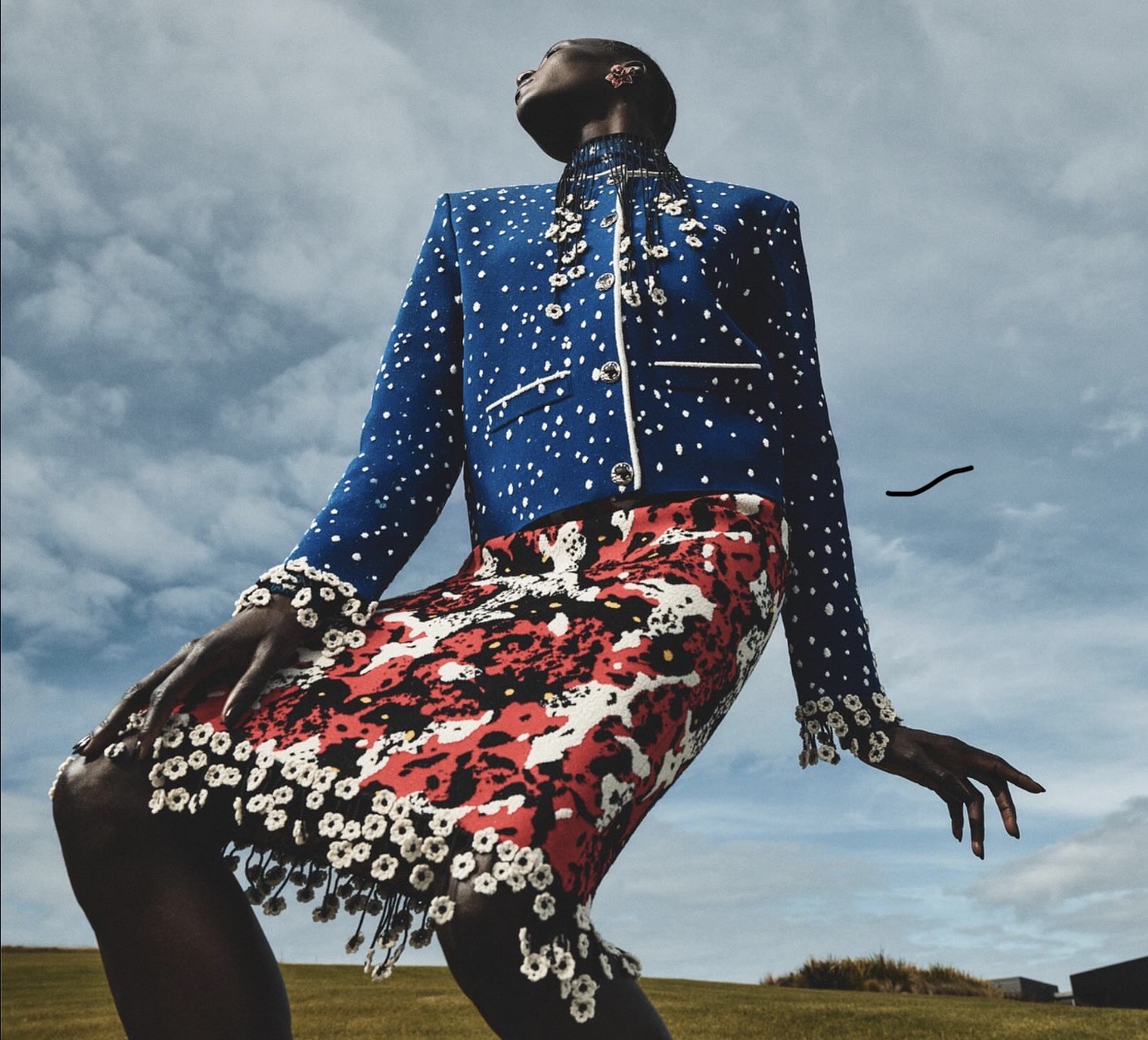
You have a dream. You have seen the shows, the campaigns, the front rows, the moment a designer walks out at the end of a runway to receive applause from a room full of the most photographed people on earth. You have watched the clothes and felt something move in you. You have thought about making things, about building something with your hands and your mind that did not exist before you. That feeling is real. Hold onto it.
Now let us talk about everything they do not show you.
Fashion Week runs on a schedule so compressed it borders on violent. A normal workday during events like New York Fashion Week frequently exceeds twelve hours. Models arrive at castings before sunrise and leave fittings after midnight. Designers have not slept properly in weeks. The adrenaline of the show sustains people through it, and when the adrenaline runs out, something else fills the gap.
The most documented driver of substance abuse among fashion models is the relentless pressure to remain thin. For decades, the industry’s sample sizes and casting expectations have created an environment where extreme thinness is not just preferred but professionally required. Many models report turning to stimulants, cocaine and prescription drugs as tools to suppress hunger and maintain energy during gruelling shoot schedules. In some corners of the industry, substance use has been normalised as a practical strategy for staying competitive.
A 15 year old model arrived in New York from Florida. Her apartment was done up like a little girl’s bedroom. She was slightly plump and shy. Three months later she was a mad skeleton. She had started to do loads of cocaine. That story is not from last year. It has been repeating itself for decades, in different cities, with different names, and the industry has watched it happen and adjusted nothing.
Cocaine has had a long, troubled relationship with the fashion world. It is stimulating, appetite-suppressing and socially energising, which makes it appealing in an industry that demands all three. Models, photographers, agents and designers have historically used it as a kind of social currency at industry parties and events. The short-term benefits feel very real in the moment. The long-term consequences, including cardiovascular damage, severe mental health deterioration and physical ageing, directly undermine the career these substances were meant to protect.
The lust is real too. The industry runs on desire and it weaponises it. Beautiful people placed in rooms together under enormous pressure, told their value is physical, surrounded by power imbalances so steep they rarely get named directly. The attention feels like love until it stops, and when it stops it stops suddenly. The person who wanted you last season does not remember your name this one. What the industry sells as romance, as the glamour of being wanted, is a transaction dressed in expensive lighting. It leaves people hollowed out in ways they do not have the language to describe because the industry does not give them the language. It gives them another party instead.
John Galliano told a Paris court that after every creative high he would crash and the alcohol helped him. His creativity had helped make Dior a billion dollar business. He described always more work, always more obligations, always more pressure, a dangerous and pathological spiral without control. Alexander McQueen fell victim to the industry’s arbitrary standards and got liposuction. He said afterwards: “I changed myself. It was the wrong thing to do, because I completely lost touch with who I was.” L’Wren Scott and Kate Spade also ended their lives. The fashion industry has an enduring and complex mental health problem and these high-profile events are only the tip of the iceberg. This is the room nobody photographs. It is full. And it is waiting for the next person who arrives with a dream and no warning.
The industry will not tell you there are categories of designer because doing so serves nobody who runs the machine. A face that moves product is a face that moves product, regardless of what is behind it. But the categories exist, and understanding them before you decide who you want to be is one of the most important things you can do right now.
The first is the designer who understands the craft. McQueen left school at 16, completed a tailoring course and secured two apprenticeships on Savile Row, first at Anderson and Sheppard, then at Gieves and Hawkes, where he learned traditional tailoring techniques and pattern cutting, working extensively with historical and military clothing. He spent years with cloth before he ever sent a garment down a runway. He said, “Everything I do is based on tailoring.” His approach combined the precision and traditions of tailoring and patternmaking with the spontaneity and improvisations of draping and dressmaking. These are designers who shaped what the industry became. Their vocabulary is still spoken by people who have never heard their names. They built something that outlasted the moment they were in.
The second is the influence designer. They understand people, they understand desire, they understand what a generation needs to see reflected back at itself at a specific point in time. Reading cultural momentum accurately is a genuine skill, and these designers do it well. They build brands, build followings, build businesses. The industry celebrates them loudly and discards them efficiently when the cultural moment they were reading moves on. This path feeds you well until it does not, and when it stops feeding you there is very little underneath to stand on.
The third is where you should aim. The designer who understands the craft deeply enough to use it as a tool for something larger. Not just making clothes. Making a statement about the time they are living in. Making work that carries the weight of the world they see and transforms it into something people can wear, stand in, be changed by. McQueen’s collections were not fashion moments. They were political and emotional arguments sewn into fabric, about violence, about beauty, about what it means to exist in a body in a world that wants to consume you. Kawakubo’s work consistently asked what a body is, who it belongs to, what it owes the world. These designers were artists working in the medium of clothing, and their work pointed somewhere. It told the people who encountered it something true about what it meant to be alive in that particular moment on this particular earth. That third category is the hardest and the most necessary. It is the one that digs a new path for the lost souls, that uses the craft as a language for something true, that makes work which tells a generation something real about what they are living through.
Many of you reading this already have a brand. You started it because you needed to survive, or because you had something to say, or because the official doors were closed and you built your own. That decision is valid. But here is what you need to know. The average cotton t-shirt carries 11.54 kg of CO₂ emissions across its production lifecycle. The blank stock ordered by independent brands comes from the same supply chain that produces for Shein and Zara. The fashion industry requires about 700 gallons of water to produce one cotton shirt. Textile dyeing is the world’s second largest polluter of water, with the leftover water regularly dumped into ditches, streams and rivers. Shein and Zara and the big houses are the primary architects of this destruction. They have the power and the capital to choose differently and choose not to. The young person with a ten piece drop is not the villain of this story. But every order placed without asking where the fabric comes from feeds the same machine, at whatever volume. Surviving inside a broken system without acknowledging that the system is broken is still participation.
If building with integrity feels impossible inside what currently exists, then say so. Loudly. Add your voice to the people who believe this entire structure needs to come down and be rebuilt on different terms. That is not failure. That is the most honest position available to you. The industry will not reform itself. It moves only when enough people inside it and outside it refuse to pretend it is working.
The designers who permanently changed fashion were not the ones who played the game most skilfully. They were the ones who understood it clearly enough to break it on purpose, who had a foundation so solid that the pressure of the machine could not collapse it entirely. Some of them were still destroyed by it. But their work survived. It points at the people who come after and says: this is what it looks like when you refuse.
You have the chance to be the third kind of designer. The one who walks in knowing the darkness and decides to build light inside it anyway. Not naively. Not without understanding what it will cost. But with intention, with craft, with something real to say.
The industry will ask you who you are. It will ask you to become what it needs.
The answer you give that question is everything.
What will you become?