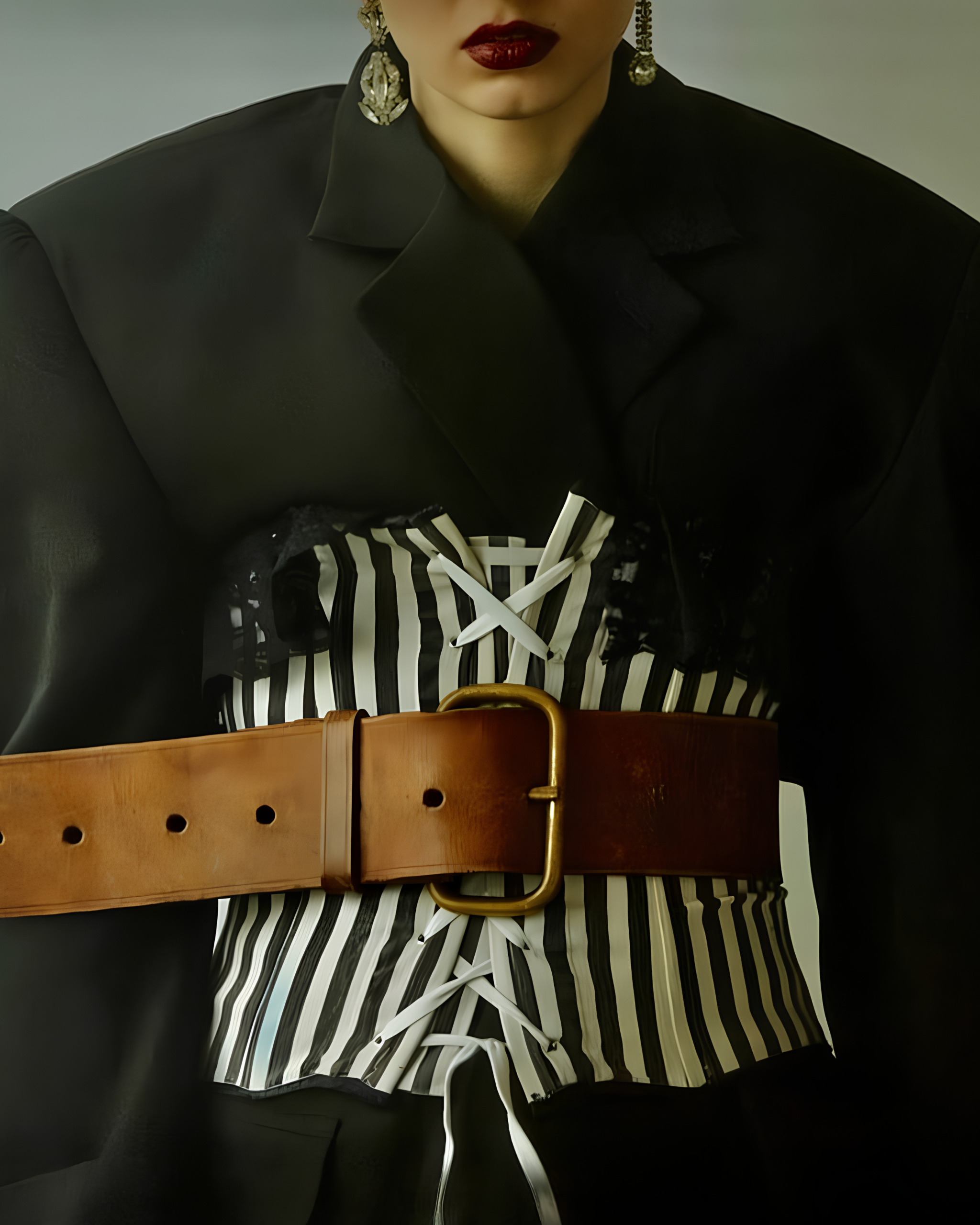
Fashion’s gatekeepers have had their reign. It’s time the industry grew up, and so did we.
The Problem: We Are Still Dressing for Strangers
Most mornings, the first thought isn’t what do I want to wear? It’s how will i look, what will they think? The “they” is shapeless; a TikTok comment section or a fashion influencer with a ring light and a sponsorship, a set of unwritten rules passed down from magazine editors who decided, sometime in the 1990s, that only certain bodies, budgets, and aesthetics deserved to take up space on a page.
Fashion has always had a gatekeeping problem. But right now, the gates have multiplied. They are no longer just the velvet ropes of a Paris atelier or the cold shoulder of a Vogue editor, they live closely in your phone, in algorithm-driven feeds that reward conformity and punish originality with the only currency that matters to the internet: engagement.
We are more “inspired” than ever and less ourselves than ever. That is not an accident.
“The most radical thing you can do in fashion right now is wear exactly what you want, without a caption explaining it.”
How We Got Here; The Influence Industrial Complex
Cast your mind back to the early 2010s. Street style photography democratised fashion, suddenly the most interesting clothes were on the pavement outside shows, more than on the runway inside them. It was thrilling. A woman in Lagos in a hand-altered jacket, a man in Seoul stacking silhouettes that no designer had yet dreamed of, fashion suddenly belonged to everyone.
Then the brands got smart. They identified the loudest voices, handed them free product, and built a new gatekeeping infrastructure that looked like freedom but functioned like a franchise. The influencer was born, and with them, a new set of rules dressed up as “inspo.” Coastal grandmother. Quiet luxury. Mob wife. Dark academia. Every six weeks, a new aesthetic micro-trend would emerge, colonise the feed, and make anything outside it feel hopelessly behind.
The trend cycle, once seasonal, then monthly, collapsed into something closer to a news ticker. And ordinary people, with ordinary wardrobes and extraordinary personal taste, were left feeling like they were perpetually failing a test they never signed up to take.
72 hrs — Average lifespan of a micro-trend on social media before it’s deemed “overdone.” $2.1T — Global fast fashion market capitalisation, built entirely on manufactured insecurity. 62% — Of Gen Z report buying clothes specifically to avoid online ridicule, not to express themselves.
We all know this and decide to ignore the fact that ‘Gatekeeping Is Control‘
There is a conversation we need to have about the language of fashion gatekeeping, because it disguises itself beautifully. It calls itself “taste, sometimes “standards, most times wraps itself as aesthetic language of exclusivity; effortless, understated, timeless and implies that those who don’t possess these qualities simply weren’t born with the right sensibility.
This is, to be precise, nonsense. Taste is not a fixed inheritance. Its something that is built, borrowed, experimented with, discarded, reconstructed. The most interesting dressers in the world — from Iris Apfel’s maximalist chaos to Pharrell’s genre-collapsing layering to the anonymous regulars at Durban’s Sunday markets who have never opened a fashion magazine and dress more than most industry veterans; they all have one thing in common: they ignored the gatekeepers entirely.
The gatekeeping is has always been about market control. If you believe your existing wardrobe is enough, you stop buying. If you believe that your proportions, your budget, your cultural references, your geography somehow disqualify you from “real” fashion, you will keep chasing. You will keep spending. You will keep refreshing the feed, looking for permission that will never actually arrive.
“Style was never meant to be a subscription service. You don’t owe the algorithm a season’s worth of new content — and you don’t owe the brands your identity.”
Why Personal Style Is the Only Sustainable Fashion
Here is a radical proposition: the most sustainable fashion choice, environmentally, psychologically, financially; is to develop an actual point of view and dress accordingly. Not a “capsule wardrobe” as prescribed by a YouTuber, or a “uniform” curated from a trend report. A genuine aesthetic that reflects who you are, where you come from, what you love.
We are not anti-fashion fashion. We are the actual engine of fashion, the original creative force that the industry then mines for its next campaign, strips of context, packages for mass production, and sells back to us at a markup. The least we can do is claim that force for ourselves first.
The Bigger Picture: What a Grown-Up Fashion Industry Looks Like
A mature industry does not need to manufacture insecurity to sell product. It creates things that are genuinely beautiful, genuinely useful, or genuinely meaningful, and trusts that people will want them on those terms. It celebrates the breadth of human aesthetic expression rather than funnelling it into a handful of commercially convenient micro-niches. It pays its garment workers and publishes its supply chains. It stops using “heritage” as a proxy for “expensive” and starts using it to mean something about actual craft and story.
It also stops punishing people, particularly women, people of colour, particularly anyone outside Western capitals, for not conforming to a standard that was never designed with them in mind. Fashion has for too long operated on the assumption that its aesthetic authority is self-evident and its hierarchy is natural. Neither is true. Both are choices.
The good news is that the industry does not need to change before you do. You can grow up first. You can decide, today, that your wardrobe is not a performance for an audience that doesn’t actually care about you, it is a private, daily, entirely personal act of self-expression that belongs to no one but you.
The gatekeepers only have power because we keep showing up at the gate and asking to be let in. We were the gate was closed y it never was.
“Fashion was always supposed to be joy. It was not meant to give you anxiety, or performance, or a debt you owe to the internet. Get dressed for yourself. That was always the assignment.”
Fashion is Love.