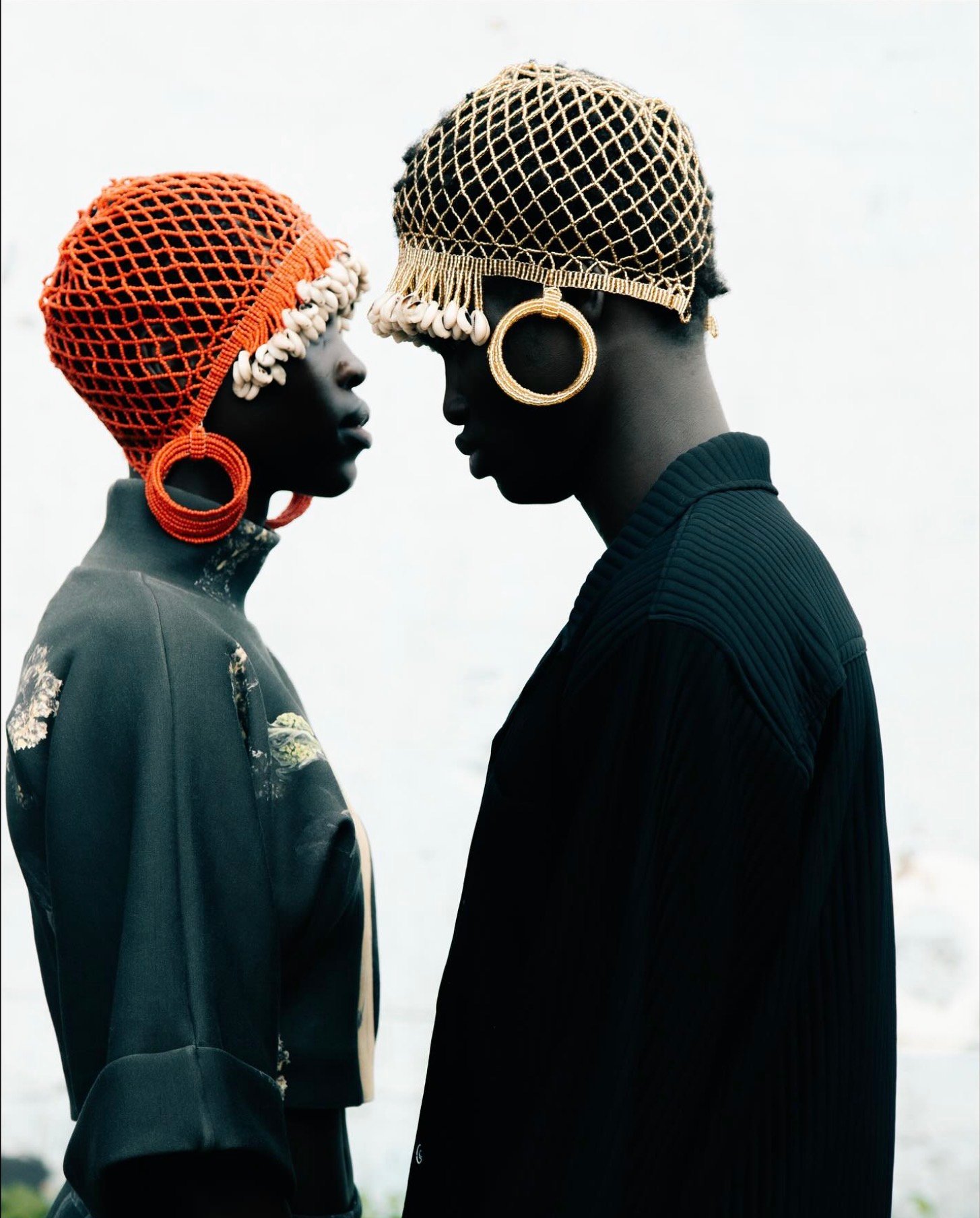
When we talk about African art in the context of fashion, we are talking about the soul of a continent that has shaped the very foundation of style worldwide. From textiles to silhouettes, from beadwork to rhythm, Africa has been the blueprint long before the runways gave it their stamp of approval. And yet, when our designers step into the international stage, they are met with glass ceilings that still feel unshattered.
The truth is, African fashion continues to be referenced, borrowed, and reinterpreted by global houses that rarely acknowledge the source. You see the patterns in Paris, you see the vibrancy in Milan, and you feel the energy in New York — but too often, the names attached to these moments are not African. That is the paradox: we are everywhere, yet still treated as outsiders.
But optimism is our currency. The African fashion industry is no longer waiting for validation — it is building its own tables, its own stages, its own catwalks. Lagos Fashion Week, South Africa Fashion Week, the rise of Dakar’s creative scene, Kampala’s underground movements — these are not footnotes; they are the opening chapters of something unstoppable.
What we face are barriers: visa restrictions, underrepresentation in the buyers’ markets, the persistent narrative that Africa is a “trend” instead of a permanent force. There is still a segregation in the way African designers are placed in “special categories,” as though our work needs translation. And yet, the irony is that our work has already translated — into the codes of brands that dominate the luxury world.
What makes me proud is how African creatives continue to shape global taste without losing authenticity. The weaving in Ghana, the tailoring in Nigeria, the hand-dyeing traditions in Mali, the avant-garde experiments in East Africa — these are not just craft, they are philosophies. Fashion here is not about the fleeting; it is about storytelling, resilience, and beauty in survival.
The industry still has much to fight for. Yet, the fight is one we are winning. Every stitch, every print, every silhouette that comes out of Africa carries with it a defiance against invisibility. Our voices are no longer whispers in global fashion — they are echoes that cannot be ignored.
HuntrMania was built on that belief: that Africa’s fashion, like its art, belongs at the center of conversation. And as Editor-in-Chief, I remain convinced that what the world calls barriers are simply delays. Our influence is undeniable. Our time is not coming. Our time is already here.